GPON Technology Explained: How It Works, Benefits & Limitations
In a world where everything’s moving online, fast, and reliable internet isn’t just nice to have, it’s essential. People use it for work meetings, streaming shows, gaming, online classes, or running a business from almost anywhere. As everyone expects stable, high-speed connections, fiber-optic networks are popping up everywhere. One of the most popular solutions in this field is GPON.
What’s GPON All About?
GPON stands for Gigabit Passive Optical Network. That sounds a bit technical, but the idea is pretty simple: It’s a fiber-optic system that brings internet, phone, and TV services straight to your home or office through a single fiber line.
Here’s the big difference from old copper-based connections: GPON uses light to send data. That means faster speed, hardly any lag, and a much more stable connection. GPON is like an efficient highway, letting internet providers connect lots of customers without needing a ton of extra equipment.
How GPON Network Functions
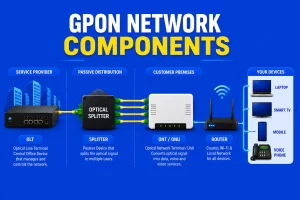
Let’s break down the GPON Network. Everything starts at the central hub, the Optical Line Terminal, or OLT. The OLT sends information down fiber-optic cables. Along the way, passive optical splitters come into play. These clever little devices split the signal up so it can reach a bunch of homes or businesses without needing any outside power.
When the signal reaches your place, an Optical Network Terminal (ONT) or, sometimes, an Optical Network Unit (ONU) receives it and converts it back into data your computer, phone, or TV can use. Since the network runs on light, not electricity, it can handle much more data and cover longer distances without causing headaches like signal loss.
Step-by-Step Process of GPON Network
1. The service provider sends data from their main network.
2. The OLT pushes that data out as light signals through fiber cables.
3. Passive splitters distribute the signals to several users at once.
4. Your ONT or ONU receives the signal at your home or office.
5. That signal gets converted into the internet, phone, or TV services you actually use.
This setup is a major reason more people and businesses are switching to fiber.
Key Elements of a GPON System
Several essential components in a GPON network work together to ensure reliable internet connectivity.
- Optical Line Terminal (OLT): The main control center, usually at the provider’s central office. It manages everything and connects out to users.
- Optical Splitter: A passive gadget that splits one fiber signal into paths for many customers with no extra power required.
- Optical Network Terminal (ONT): Installed at the customer’s location, the ONT converts optical signals into electrical signals that can be used by home and office devices.
- Optical Network Unit (ONU): The ONU performs functions similar to an ONT and acts as an interface between the fiber network and end-user equipment.
- Fiber-optic Cable: The lines that actually do the carrying, sending data as pulses of light.
Advantages of GPON
The popularity of GPON-based broadband solutions is largely due to their many benefits.
- High-Speed Connectivity
Fiber networks can support significantly higher data rates compared to traditional copper cables, making them ideal for modern internet applications.
- Greater Bandwidth Capacity
A single fiber can serve multiple users while still delivering excellent performance and reliability.
- Low Maintenance Requirements
Because passive splitters do not require power, the network becomes simpler and easier to maintain.
- Long-Distance Transmission
Optical fibers can carry data over long distances without significant degradation in signal quality.
- Energy Efficiency
The passive architecture consumes less power, helping service providers reduce operational costs.
- Future-Ready Infrastructure
As internet usage continues to grow, fiber-based systems can be upgraded more easily than conventional broadband technologies.
Disadvantages of GPON
While GPON offers numerous benefits, it also has a few limitations.
- Higher Initial Deployment Cost
Installing fiber infrastructure requires a considerable investment in cables, equipment, and installation.
- Specialized Installation
Fiber networks require trained technicians for deployment and maintenance.
- Shared Bandwidth
Since multiple users share the same optical connection, network performance may vary during periods of heavy usage.
- Physical Fiber Damage
Although fiber cables are highly efficient, they can be vulnerable to physical damage during construction work or improper handling.
Why GPON Is Leading the Way
As we rely on the internet for almost everything, video calls, cloud backups, smart homes, you name it, fast and reliable connections matter more than ever. GPON helps service providers deliver the speeds people want without breaking the bank. Its mix of efficiency, flexibility, and power makes it a top pick for homes, businesses, and everything in between.
Conclusion
GPON technology has changed the way internet connectivity is delivered by using fiber-optic cables and an efficient passive network design. It enables users to enjoy faster internet speeds, reliable performance, and better bandwidth distribution, even over long distances.
As the demand for high-speed internet continues to grow, GPON has emerged as a preferred choice for both service providers and consumers. For households, it means smoother streaming, online gaming, and video conferencing. For internet service providers, it offers a scalable and cost-effective solution for expanding network coverage. GPON is all set to play a key role in the future of digital connectivity.