
What Is a Static IP vs Dynamic IP? A Complete Comparison Guide
In today’s internet-driven world, IP addresses play a critical role in how devices communicate online. Whether you’re running a business server, working remotely, gaming, or simply browsing the web, understanding the difference between a Static IP vs Dynamic IP can help you make smarter internet decisions.
This guide explains what static and dynamic IPs are, how they work, their advantages and disadvantages, and which one is best for different use cases – all in simple, practical terms.
What Is an IP Address?
An IP address (Internet Protocol address) is a unique numerical identifier assigned to every device connected to the Internet. It allows data to be sent and received correctly between devices, websites, and servers.
Think of it like a digital home address – without it, online communication wouldn’t work.
There are two main types of IP addresses provided by Internet service providers:
- Static IP
- Dynamic IP
What Is a Static IP?
A static IP address is a fixed, permanent IP address that does not change over time. Once assigned, it remains the same every time you connect to the internet.
How Static IP Works
- Your ISP assigns a dedicated IP address to your connection
- The address stays constant unless manually changed
- Often provided as a paid add-on service
Common Uses of Static IP
- Hosting websites or servers
- Remote desktop access
- CCTV and surveillance systems
- VPN servers
- VoIP and enterprise applications
What Is a Dynamic IP?
A Dynamic IP address is automatically assigned and changes periodically. Most home internet connections use dynamic IPs by default.
How Dynamic IP Works
- Assigned from a pool of available IPs
- Changes when the router restarts or the lease expires
- Managed using DHCP (Dynamic Host Configuration Protocol)
Common Uses of Dynamic IP
- Home browsing
- Streaming OTT content
- Online gaming
- Social media and video calls
- Everyday internet usage
Static IP vs Dynamic IP: Key Differences
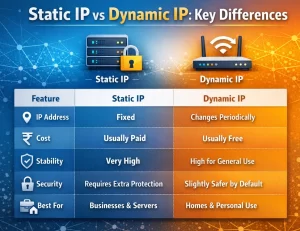
Advantages of Static IP
1. Reliable Remote Access
Static IPs allow seamless access to devices or networks from anywhere without tracking IP changes.
2. Ideal for Hosting
Perfect for hosting websites, email servers, and FTP servers since the address never changes.
3. Better DNS Support
Faster and more reliable domain name resolution.
4. Consistent Performance
Useful for applications that require uninterrupted connectivity.
Disadvantages of Static IP
- Higher cost
- Increased security responsibility
- Requires technical configuration
- Easier to track if unsecured
Advantages of Dynamic IP
1. Cost-Effective
No additional charges in most broadband plans.
2. Enhanced Security
Changing IPs makes tracking harder for malicious users.
3. Easy Management
No manual setup or maintenance required.
4. Ideal for Home Users
Works perfectly for streaming, browsing, and video calls.
Disadvantages of Dynamic IP
- Not suitable for hosting servers
- Remote access may require extra tools
- IP changes can affect certain applications
Static IP vs Dynamic IP: Which One Should You Choose?
Choose a Static IP If You:
- Run a business website or server
- Need remote access to office systems
- Use CCTV or enterprise software
- Host email or VPN services
Choose a Dynamic IP If You:
- Are you a home user
- Stream OTT platforms
- Attend video meetings
- Browse and game online
- Want a cost-effective solution
For most users, a dynamic IP is more than sufficient.
Does Static IP Improve Internet Speed?
No.
Static and dynamic IPs do not affect internet speed.
Speed depends on:
- Broadband plan
- Network infrastructure (FTTH vs copper)
- Router quality
- Network congestion
Static IP improves access reliability, not speed.
Static IP and Security: What You Should Know
While static IPs offer consistency, they also require:
- Firewalls
- Network monitoring
- Strong authentication
- Regular security updates
Dynamic IPs are slightly safer for home users because the IP address keeps changing.
Static IP vs Dynamic IP for Businesses
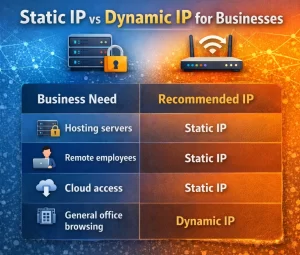
Many businesses use both:
Static IP for servers + Dynamic IP for employees.
FAQs: Static IP vs Dynamic IP
What is the main difference between static and dynamic IP?
A static IP remains constant, while a dynamic IP changes periodically.
Is static IP better than dynamic IP?
Static IP is better for servers and businesses; dynamic IP is better for general users.
Can I switch from dynamic to static IP?
Yes, most ISPs offer static IP as an add-on service.
Does static IP improve gaming?
Not significantly. Ping and latency matter more than IP type.
Is static IP safe?
Yes, if secured properly with firewalls and network protection.
Final Thoughts
Understanding Static IP vs Dynamic IP helps you choose the right internet setup based on your actual needs, not myths or assumptions.
- Home users: Dynamic IP is reliable, affordable, and secure
- Businesses & professionals: Static IP offers control and consistency
Choosing wisely ensures better performance, security, and long-term value.